Post-Rock
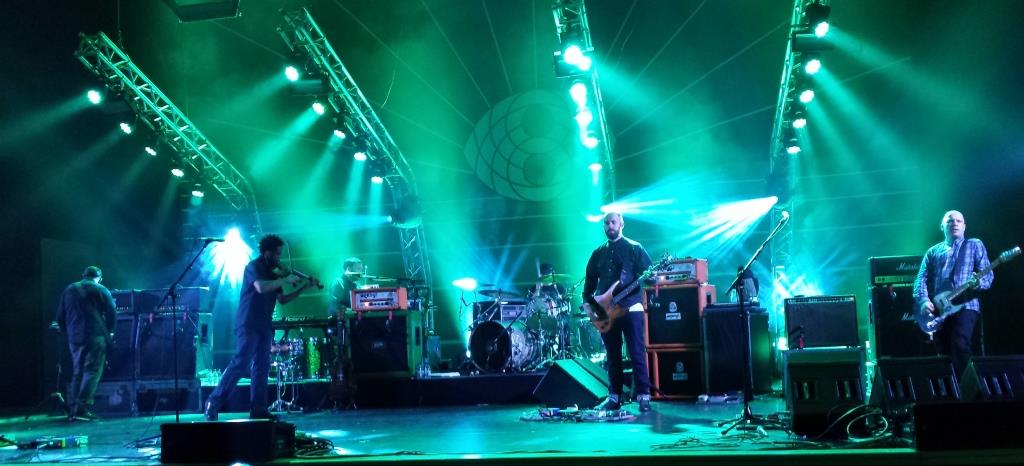
Mogwai performing at the Royal Festival Hall, London, 2014.
A genre that uses the instrumentation of rock — electric guitar, bass, drums — to achieve ends traditionally associated with classical or electronic music: texture, atmosphere, dynamics, narrative arc, without vocals. The term was coined by critic Simon Reynolds in 1994 reviewing Talk Talk’s Laughing Stock (1991).
Defining works
| Artist | Album | Year | Notes |
|---|---|---|---|
| Talk Talk | Laughing Stock | 1991 | Proto-post-rock; pastoral and desolate |
| Slint | Spiderland | 1991 | Blueprint for math rock and quiet-loud dynamics |
| Tortoise | Millions Now Living Will Never Die | 1996 | Jazz, dub, krautrock synthesis |
| Godspeed You! Black Emperor | F♯ A♯ ∞ | 1997 | Maximalist; apocalyptic; field recordings |
| Mogwai | Young Team | 1997 | Scottish; guitar density as emotional weapon |
| Explosions in the Sky | The Earth Is Not a Cold Dead Place | 2003 | Cinematic; emotionally legible |
| Sigur Rós | Ágætis byrjun | 1999 | Icelandic; invented a language (Vonlenska) for vocals |
Dynamics
Post-rock’s central technique: prolonged tension and release. A track builds from near-silence over several minutes, adding layers, increasing density, until it erupts. The eruption is only meaningful because of the patience that precedes it. This is why the genre rewards headphones and punishes background listening.
The joke is that all post-rock sounds the same. The truth is that the best of it sounds more emotionally specific than most music with lyrics.